our preschool

Reggio Emilia preschool near Cemagi. Child-led, nature-rooted, Real.

Preschool at Untuk Anak isn't a smaller version of school. It's a place where a child's question — 'can we build a tree house?', 'why do bees come here?', 'what happens if I mix these?' — becomes the whole week of learning. Literacy, numeracy, science, art, and life skills all live inside real work, done by real hands.

Free · about 1 hour · Mon–Sat · usually books 3–5 days out.

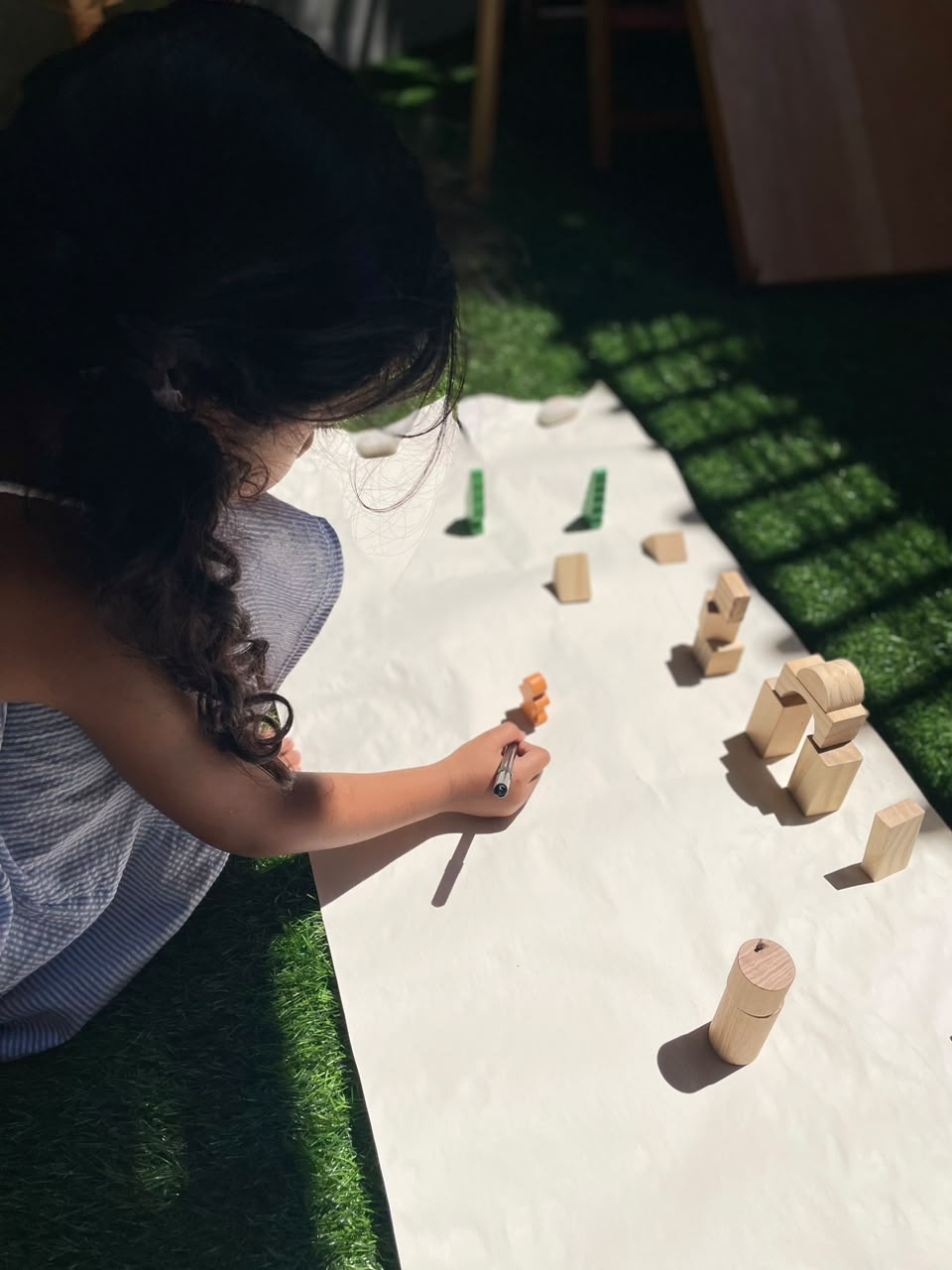
A child drawing around wooden blocks laid out on paper in the sunshine

what we hold at the centre

The four things we come back to, every day.

Curiosity

Every day begins with the child's questions, not our lesson plan.

Care

For each other, for the space, for the food we eat, for the earth we share.

Courage

To try, to make a mess, to be wrong, to keep going.

Wonder

The world is huge and strange and beautiful. We move through it slowly on purpose.

how vs what

What is a Reggio Emilia-inspired preschool?

Most schools tell you the WHAT — the subjects. We do that too. But the HOW is where a preschool becomes a real preschool: whether the child is a passive listener, or the protagonist of their own learning.

the WHAT — subjects, woven in

Everything a good early years program should cover — never siloed, always connected to a real project.

  • Early literacy — phonics, mark-making, story, conversation
  • Early numeracy — counting, measuring, sorting, patterns
  • Science — water, plants, weather, animals, cause & effect
  • Art & the atelier — clay, paint, print, colour, light
  • Life skills — cooking, cleaning, dressing, caring for the space
  • Gardening & cooking — from soil to plate
  • Movement & body — climbing, balance, dance, rest
  • Social-emotional — feelings, friendship, conflict, repair
the HOW — emergent, project-based

A child's question or noticing becomes the seed of a multi-week project. Everyone learns through it — together.

  1. 01A child notices something — a snail, a puddle, a stack of stones.
  2. 02Educators listen closely, ask questions, and offer materials — never answers.
  3. 03The idea grows into a project the group works on for days or weeks.
  4. 04Literacy, numeracy, science and art get woven in as the project needs them.
  5. 05The children lead. Educators document, extend, and prepare the environment.
  6. 06The learning is real, remembered, and worn on their hands.
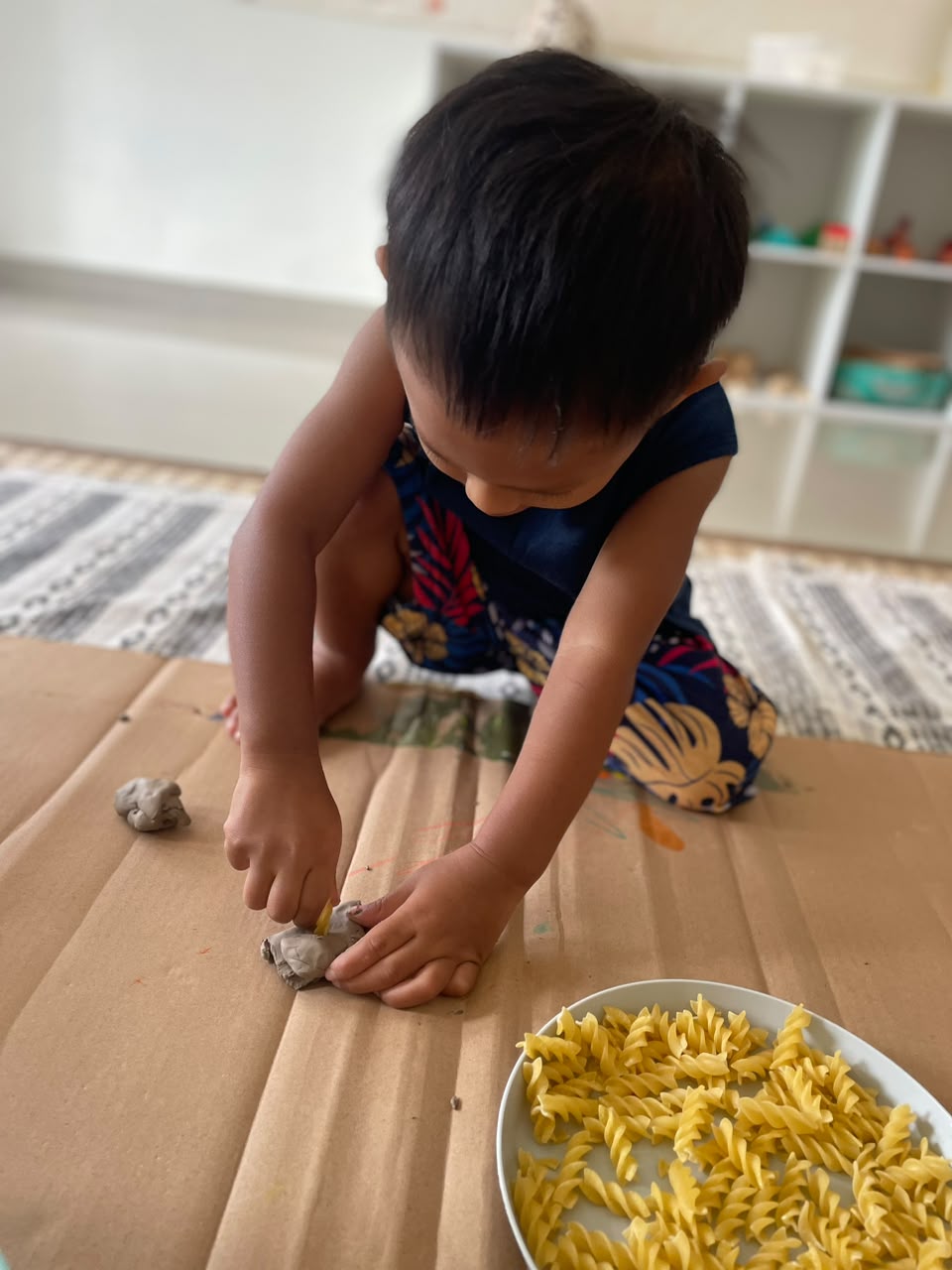
A child pressing clay with both hands at a low table

how a project actually begins

What does a child-led project look like?

Our space is small and our land is small, and that is the whole point. We wander it slowly. We notice. And when a child asks for something — a slide, a tree house, a shop for their potions — we take it seriously.

01

The child notices.

'Can we build a tree house?' It doesn't matter that we don't have a tree, or that they are three years old. The question is where the learning begins.

02

We ask, we listen, we provide.

What would a tree house need? How tall? Who will live in it? We bring wood, string, tape, paper, tape measures — and questions. Never a finished answer.

03

The project unfolds — for as long as it needs to.

Measuring becomes numeracy. Drawing plans becomes literacy. Deciding together becomes social learning. Building becomes physics, patience, pride. It might take a week. It might take a month. The child owns it.

This is what we mean when we say 'child-led.' Not chaos. Not a lack of plan. It's the belief — proven again and again — that a child who is trusted with real work will show you what real learning looks like.

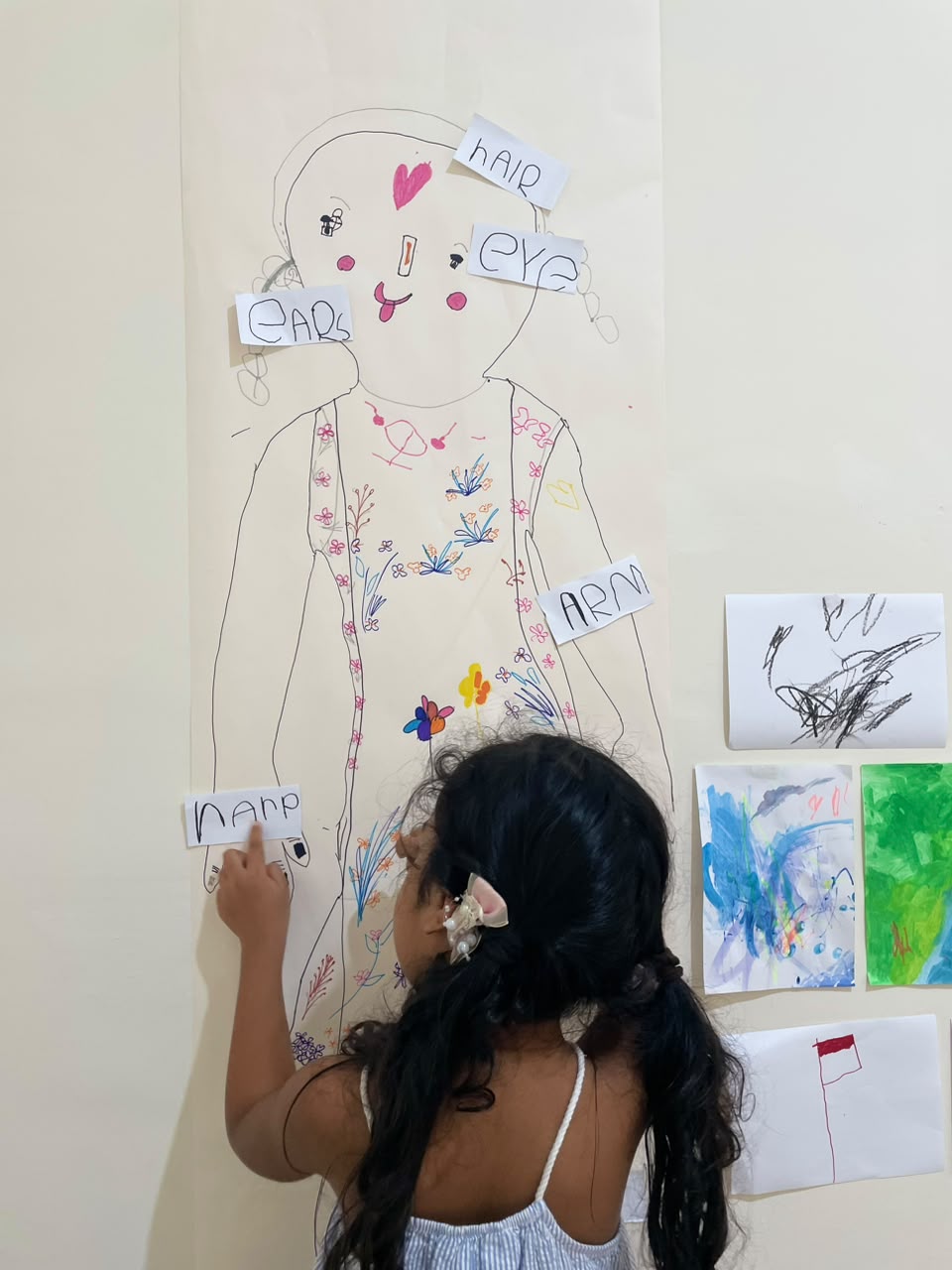
A child matching handwritten word cards to a large body drawing

phonics, the Reggio way

How do you teach reading and phonics?

  • ·Sound-of-the-week explored through provocations — objects, textures, images that begin with the same sound.
  • ·Letters shaped in clay, sand, and paint before they are ever drawn on a page.
  • ·Story-rich mornings — read-alouds, retellings, and puppet play that build listening and vocabulary.
  • ·Name-writing, journaling, and mark-making woven into arrival every day.
  • ·Songs, rhymes, and conversation in English and Bahasa — phonemic awareness the natural way.
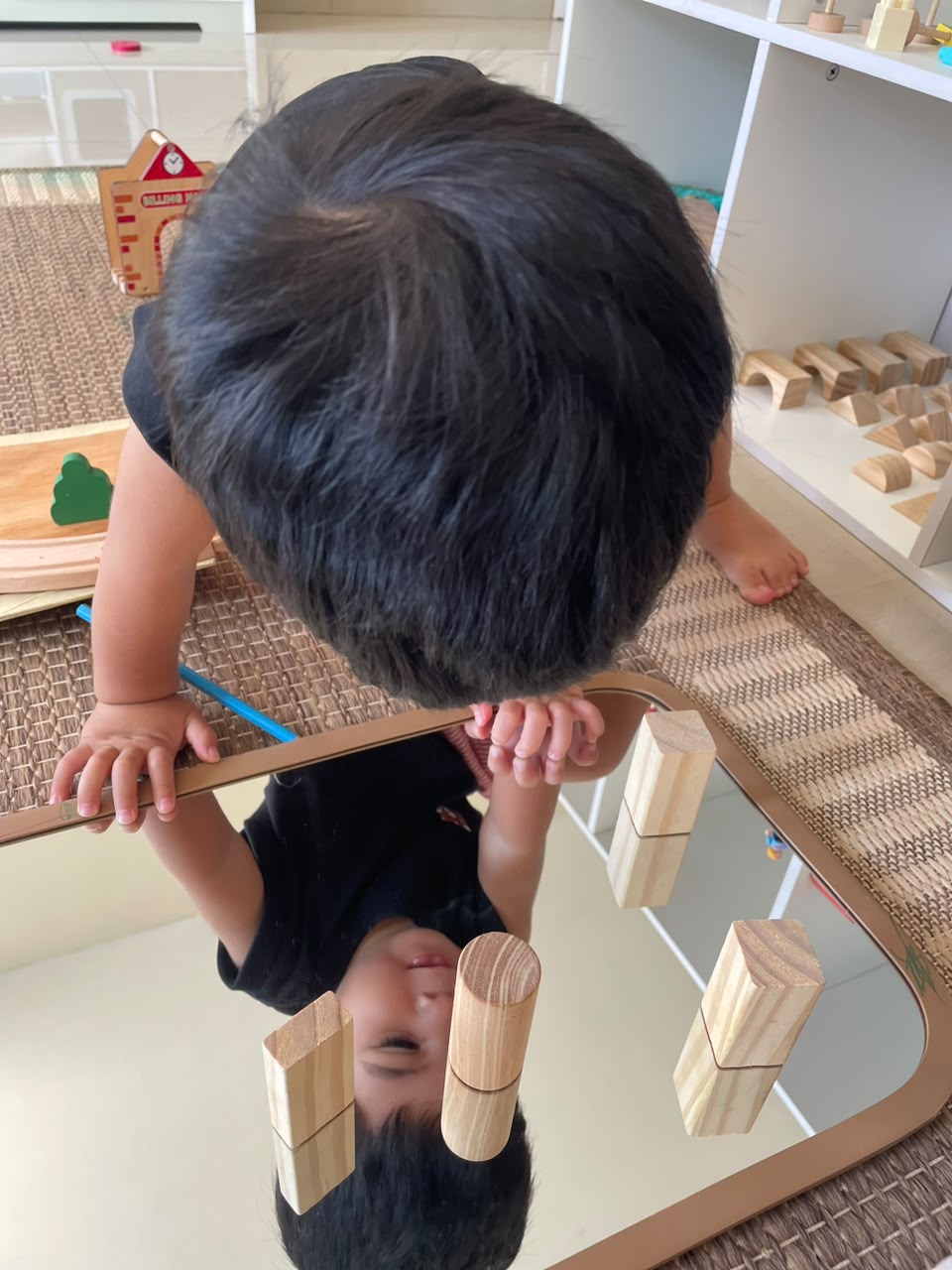
A toddler stacking wooden blocks on a mirror and watching the reflection

numeracy, the Reggio way

How do you teach maths and numeracy?

  • ·Loose parts — stones, shells, seeds — for counting, sorting, patterning.
  • ·Cooking and baking as everyday maths — measuring, pouring, halving, doubling.
  • ·Building, block work, and clay for early geometry — shape, symmetry, balance.
  • ·Documentation walls where children see their thinking made visible.
  • ·A child's question — 'how many?', 'how tall?' — becomes weeks of investigation.

the third teacher

The environment does half the teaching.

Every shelf, every basket, every corner is chosen. Materials sit at child-height. Light and plants are cared for. Noise is soft. There are more real tools than plastic toys. In a prepared environment, a child can be trusted to work — and they rise to it.

the image of the child

Children as protagonists of their own learning.

We don't view children as empty cups to fill up. We view them — every one of them — as strong, capable, curious, and full of theories about the world. Our job is not to hand them answers. It is to prepare a space worthy of that child, to listen closely, and to walk beside them while they figure it out.

a day at a glance

What does a preschool day look like?

Half day runs 08:00–12:00 and full day 08:00–14:30, Monday to Friday, with optional extended care to 17:30. Each day includes a soft arrival, morning circle, project work, shared meals, rest, and small-group literacy and numeracy time.

See the full daily rhythm →

no tests, real evidence

How is my child assessed?

We don't use tests or grades. Educators document each child's questions, projects, and growth through photos, notes, and portfolios, with daily WhatsApp updates and a full development summary shared with families twice a year.

settling in

Is my child ready?

Most children are ready between 2 and 5 years old, once they enjoy being around other children and can manage short separations. Every child settles in at their own pace, and we never rush that process.

preschool FAQ

Quick answers about our preschool.

What is a Reggio Emilia-inspired preschool?

It treats children as capable protagonists of their own learning. Instead of a fixed lesson plan, educators follow a child's questions and noticings, offering materials, time, and a prepared environment so real, emergent projects can unfold.

What ages do you accept for preschool?

Preschool welcomes children from 2 to 5 years old, in half-day and full-day options, Monday to Friday.

Do you teach phonics and reading?

Yes, woven into Reggio-style provocations rather than worksheets — sound-of-the-week activities, letters shaped in clay and sand, story-rich mornings, and daily journaling in English and Bahasa Indonesia.

Do you teach maths?

Yes, through real materials and daily life — counting loose parts, measuring while cooking, building with blocks and clay — never worksheets.

What does a typical preschool day include?

Arrival and soft start, morning circle, project work, shared meals, rest, and small-group literacy and numeracy time. Half day ends at 12:00, full day at 14:30, with optional care to 17:30.

How will I know how my child is progressing?

Through daily documentation and WhatsApp updates, plus a full development summary twice a year — no tests or grades.

"We are not building the biggest school. We are building the school we wish existed — for children, for parents, and for teachers."

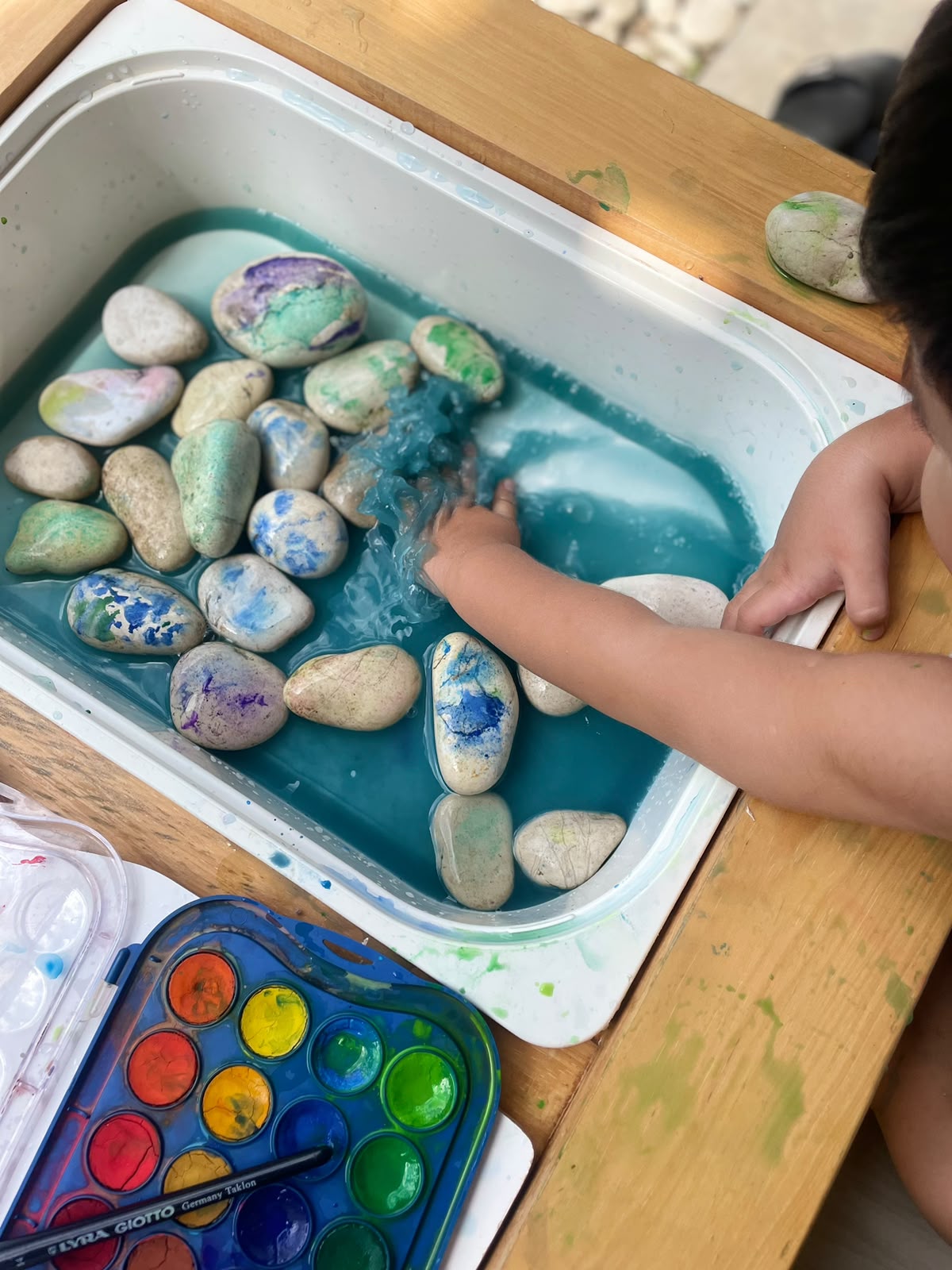
A child rinsing painted stones in a tray of coloured water

come and see

This is the kind of thing best seen in person.

A quiet morning at Untuk Anak will tell you more than any website can. Come sit at a low table, watch the children work, and feel whether this feels right for your family.

We reply within a few hours, Mon–Sat. No forms, no pressure — just a conversation.

Chat with Us